SMES · Disaster-Safe School

Health, Safety & Environment

H.S.E: everyone knows their role.

The complete fire & earthquake evacuation guide for the Chief H.S.E, the preparedness team, teachers, staff and class Team Captains.

± 9 minutes · arrows / swipe to move · F for full screen

Narrated by EDI
AJ-CorpH.S.E IDENAR Sign out ×
01 — Why this matters

The first minutes decide the safety of hundreds of children.

The schools that stay safe are not the luckiest — they are the ones that practise most, where everyone knows their own task.

  • Reference: Disaster-Safe Schools (Permendikbud 33/2019) & BNPB Reg. 4/2012
  • Drills at least once every 3 months
  • Everyone has a written role
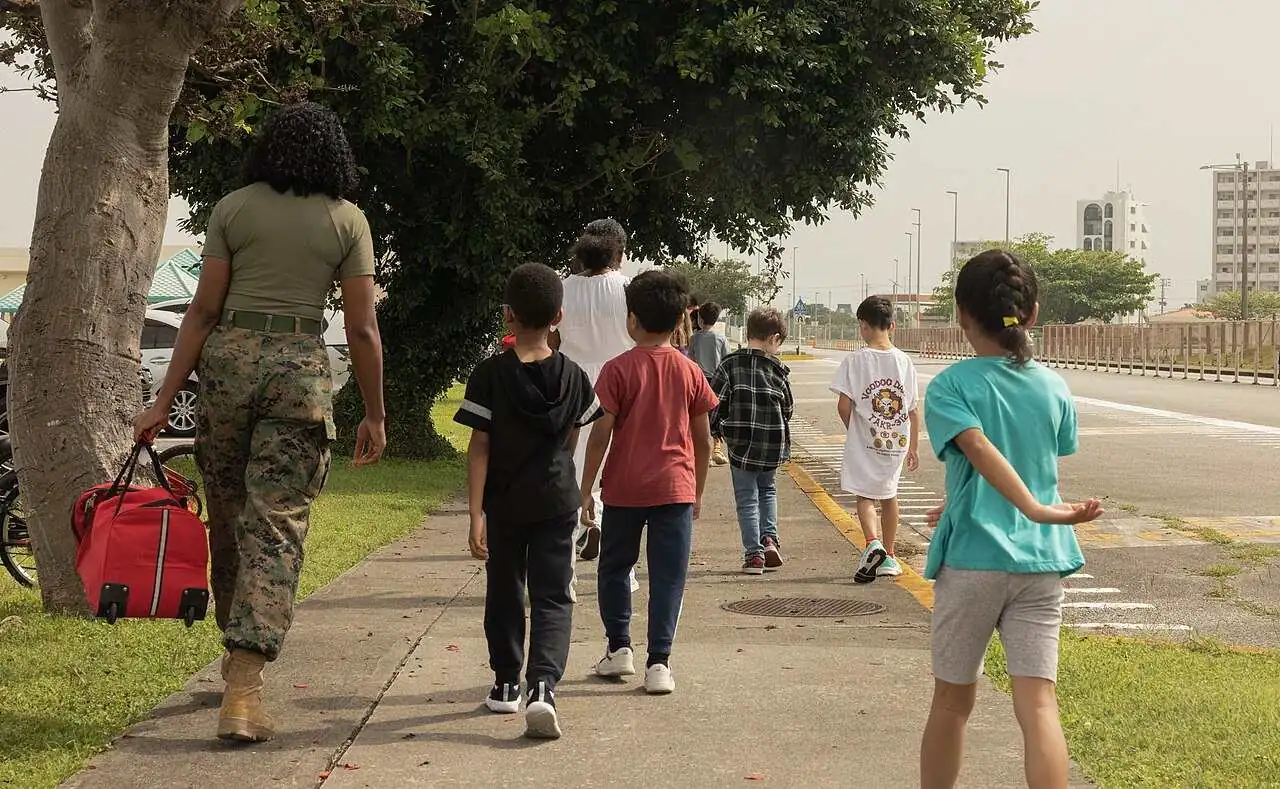
Students walking in order during an evacuation drill
Photo: U.S. Marine Corps photo by Pfc. Pedro Rojas · Public domain
02 — Chief H.S.E

Mandatory, and certified.

  • Switches the General Alarm on and off
  • Leads the evacuation from the command post at the assembly point
  • Counts everyone & receives the floor reports
  • Liaison with the fire department & disaster agency
  • Valid certificate, details kept in SMES
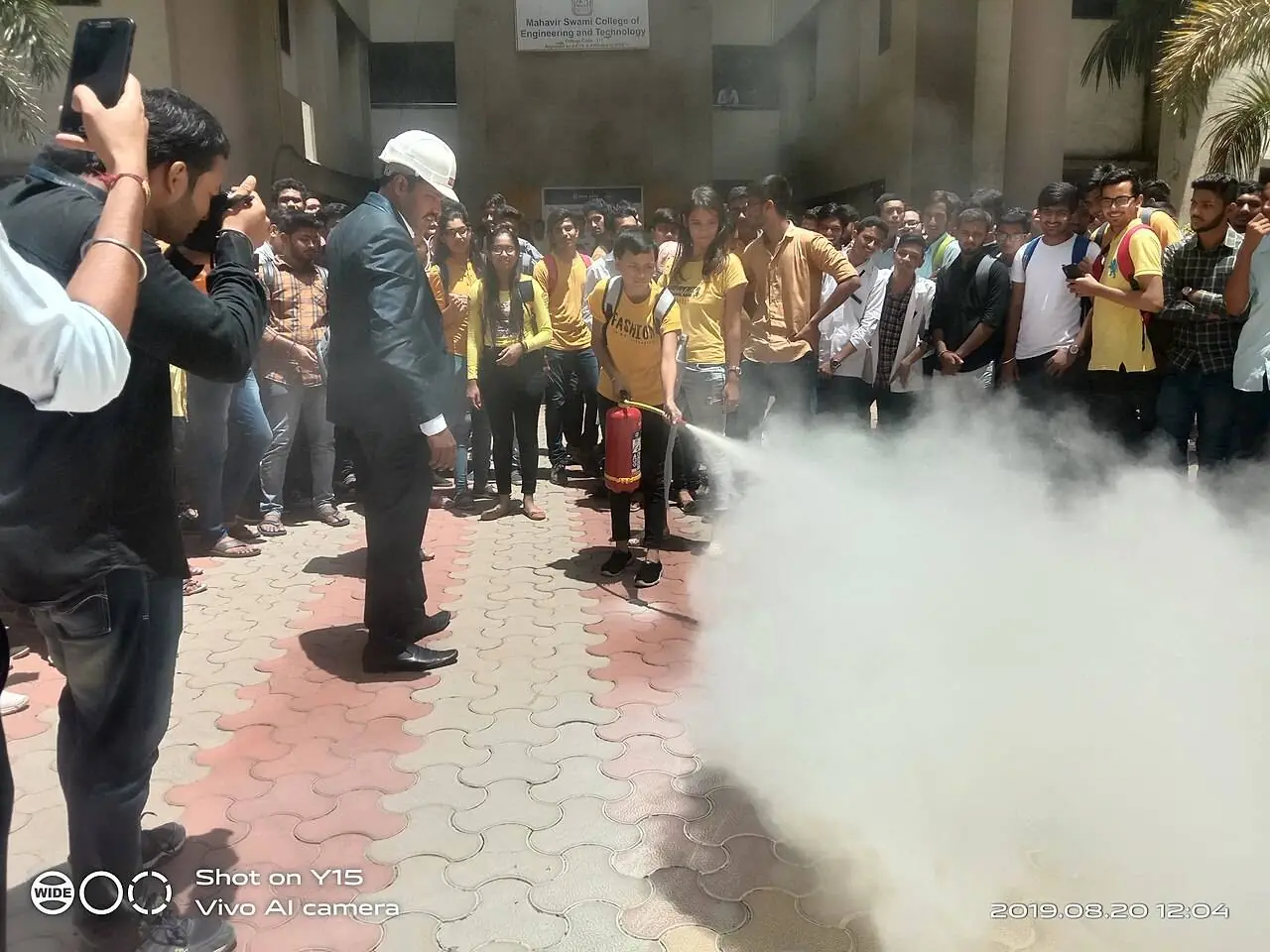
Fire extinguisher training
Photo: Aaronrspn · CC BY-SA 4.0
03 — School Preparedness Team

One team, every role with written tasks.

Chief H.S.ECommand, alarm, headcount, fire department
Deputy H.S.EStands in for the Chief, counts teachers & staff
Floor WardenOne floor: stair flow & floor clear
Room SweeperToilets, library, lab, storerooms
First Aid Team / School ClinicFirst aid post at the assembly point
First Response Team (Extinguishers)Small fires only, safety first
SecurityGate open, meet the fire department
Teacher in ClassLeads the class, counts students in SMES
Class Team CaptainStudent at the front of the class line
04 — A Team Captain in every class

Captain in front, teacher at the back.

  • The Team Captain guides the class line to the assembly point
  • The teacher walks last — nobody is left behind
  • Appoint a reserve Team Captain
  • The Captain helps count and reports to the teacher
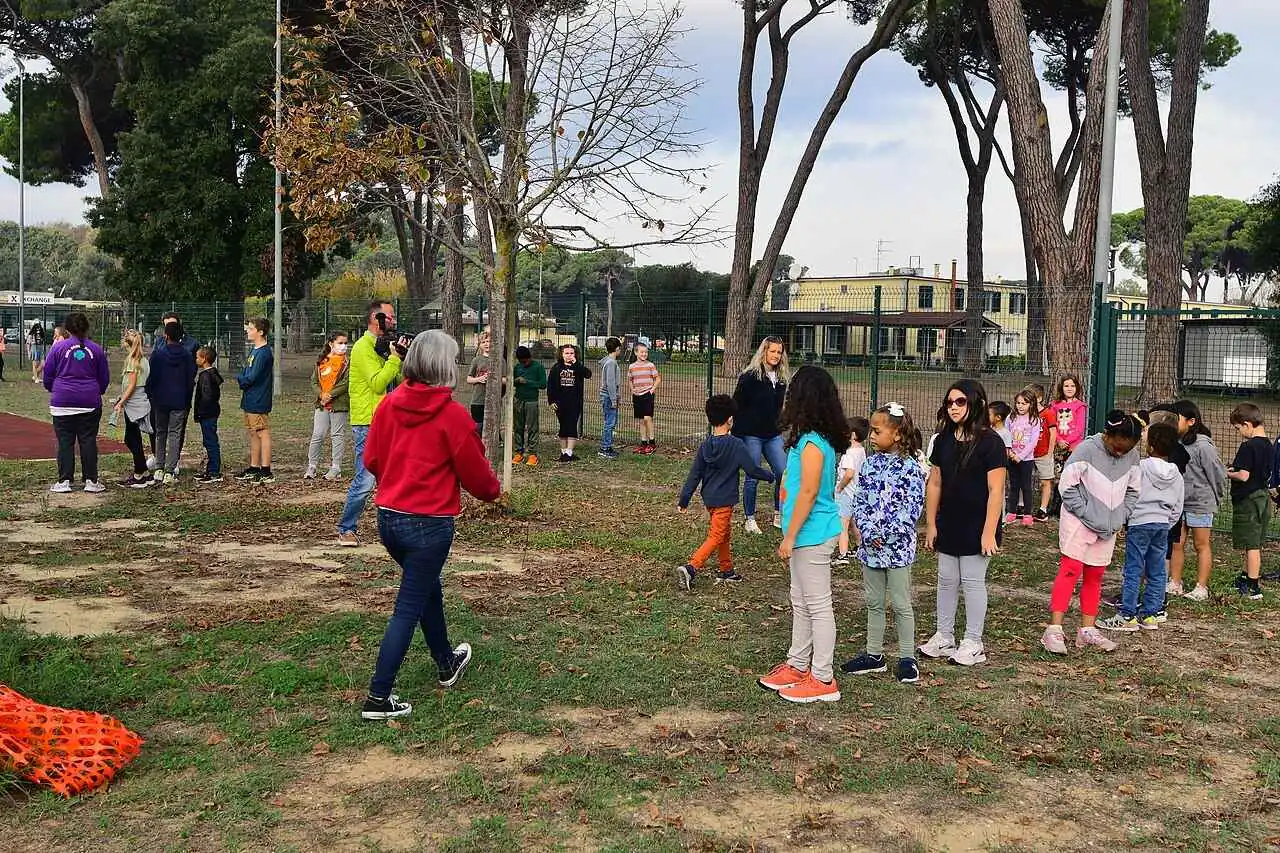
Classes lined up on the field during a drill
Photo: U.S. Army photo by Elena Baladelli · Public domain
05 — SMES General Alarm

One button, every device rings.

  • Phones & laptops of students, parents, teachers and staff — even when the portal is closed
  • Each screen shows that person's role tasks
  • Terminals locked except the H.S.E's
  • School data backed up automatically
  • Only the school in alarm — never leaks to other schools
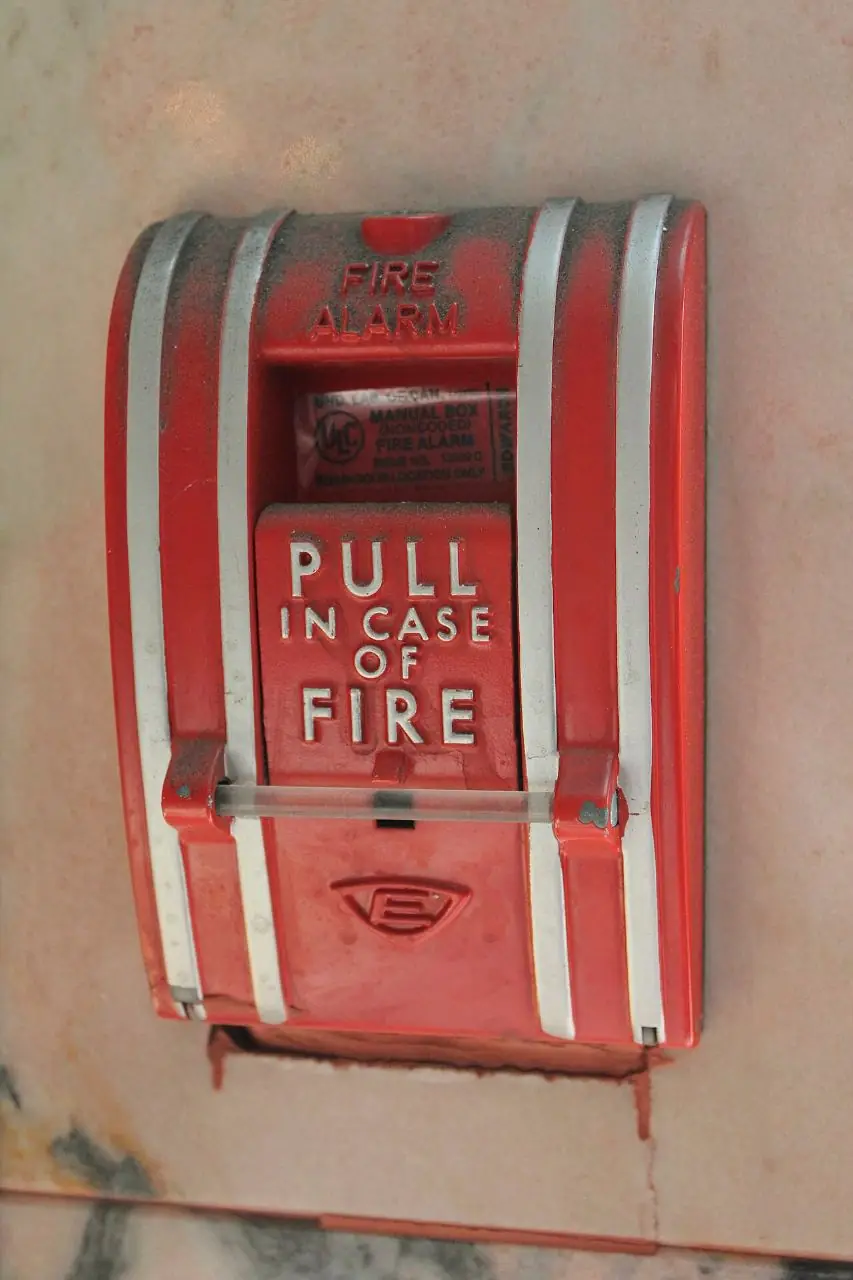
Manual fire alarm call point
Photo: SamuelDuval · CC BY-SA 3.0
06 — When a fire breaks out

Raise the alarm, call 113, evacuate.

  • Raise the alarm & tell the Chief
  • Call the fire department 113 or emergency 112
  • Extinguishers only by trained staff, for small fires
  • Fire growing: leave, close the door, evacuate
  • Pull · Aim at the base · Squeeze · Sweep
Extinguisher drill
Photo: Aaronrspn · CC BY-SA 4.0
07 — Going down the stairs: the small details

Small details on the stairs save lives.

  • Single file on the right
  • One hand on the handrail
  • Walk quickly — no running, pushing or stopping
  • Leave bags & belongings
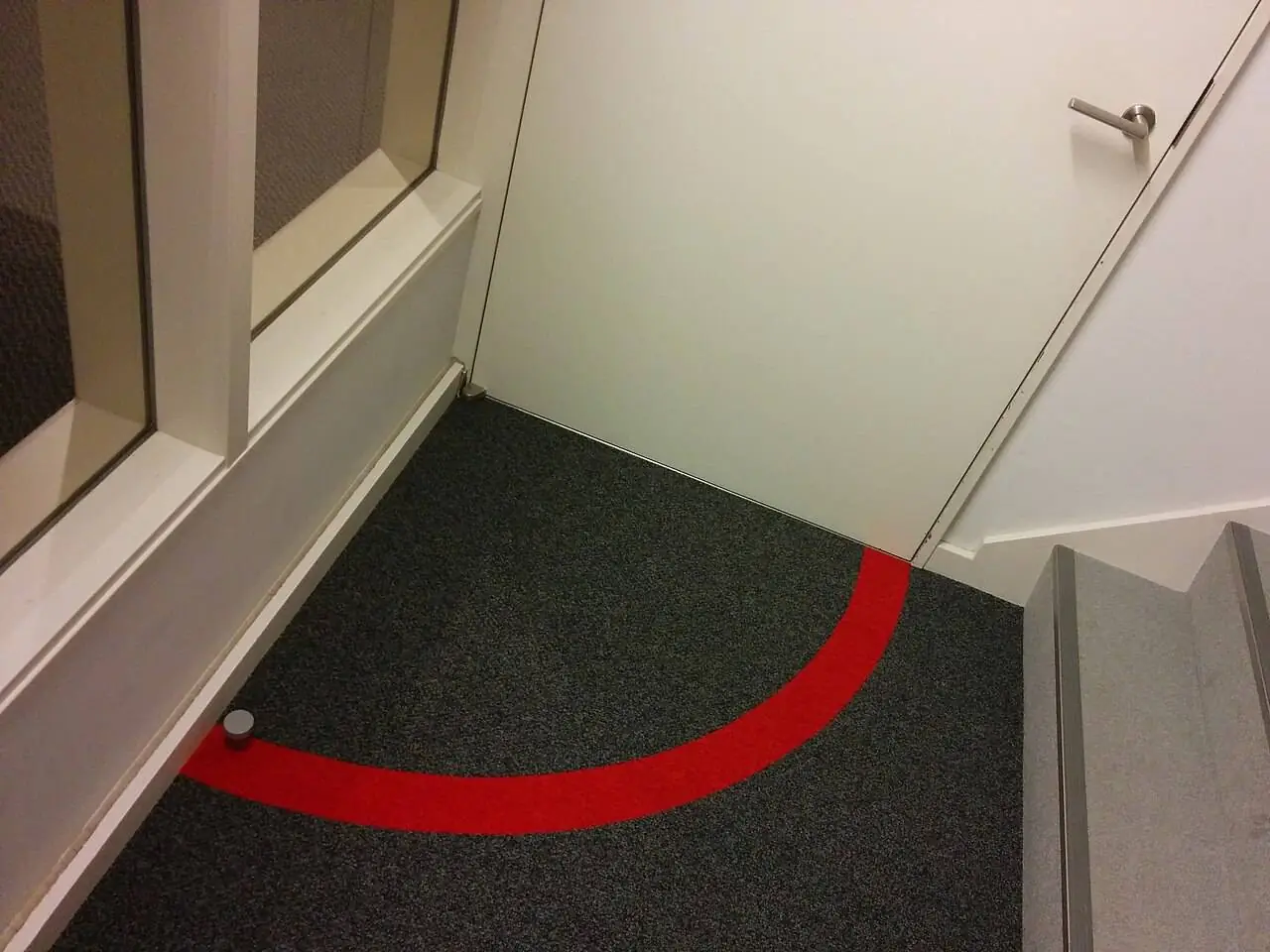
  • Never stand in the stair door's swing area
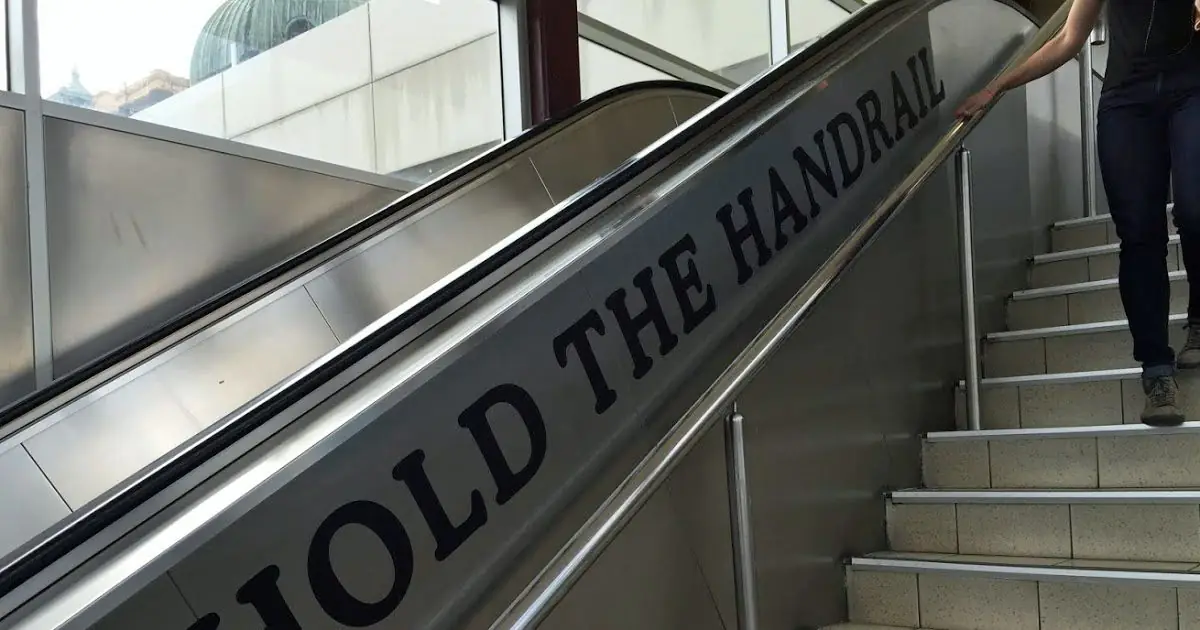
Hold the handrail
Photo: Ben Tsai · CC BY 2.0
Door swing marking in an emergency stairwell
Photo: Syced · CC0
08 — On the emergency stairs

Give way, merge in turns, help the slow.

  • Left side clear for responders coming up
  • Two floors meet on a landing: merge in turns
  • Students with special needs are accompanied and wait in a safe area
  • Close the stair door behind you — smoke stays out
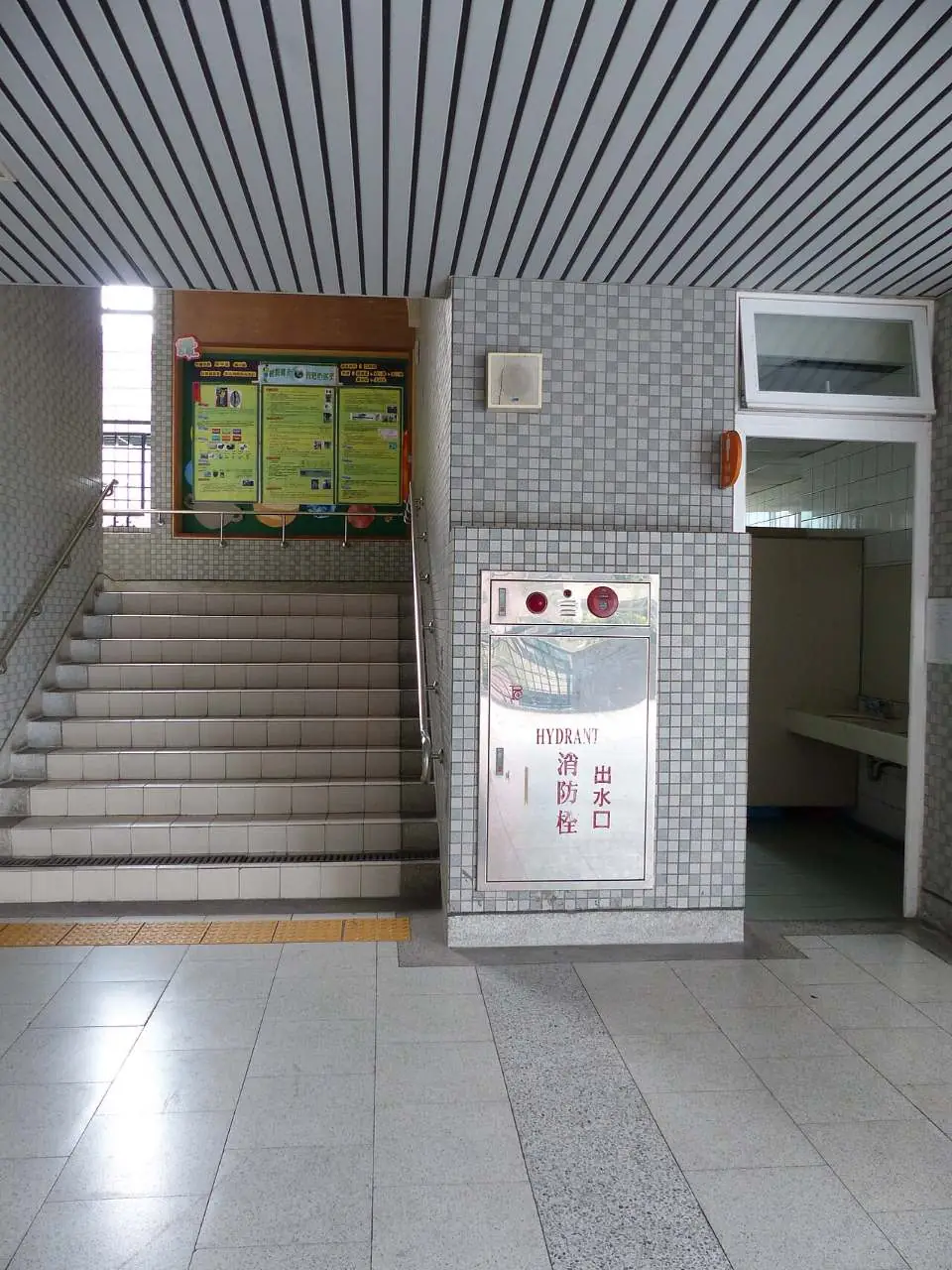
School stairs with a fire hose cabinet
Photo: 玄史生 · CC BY-SA 3.0
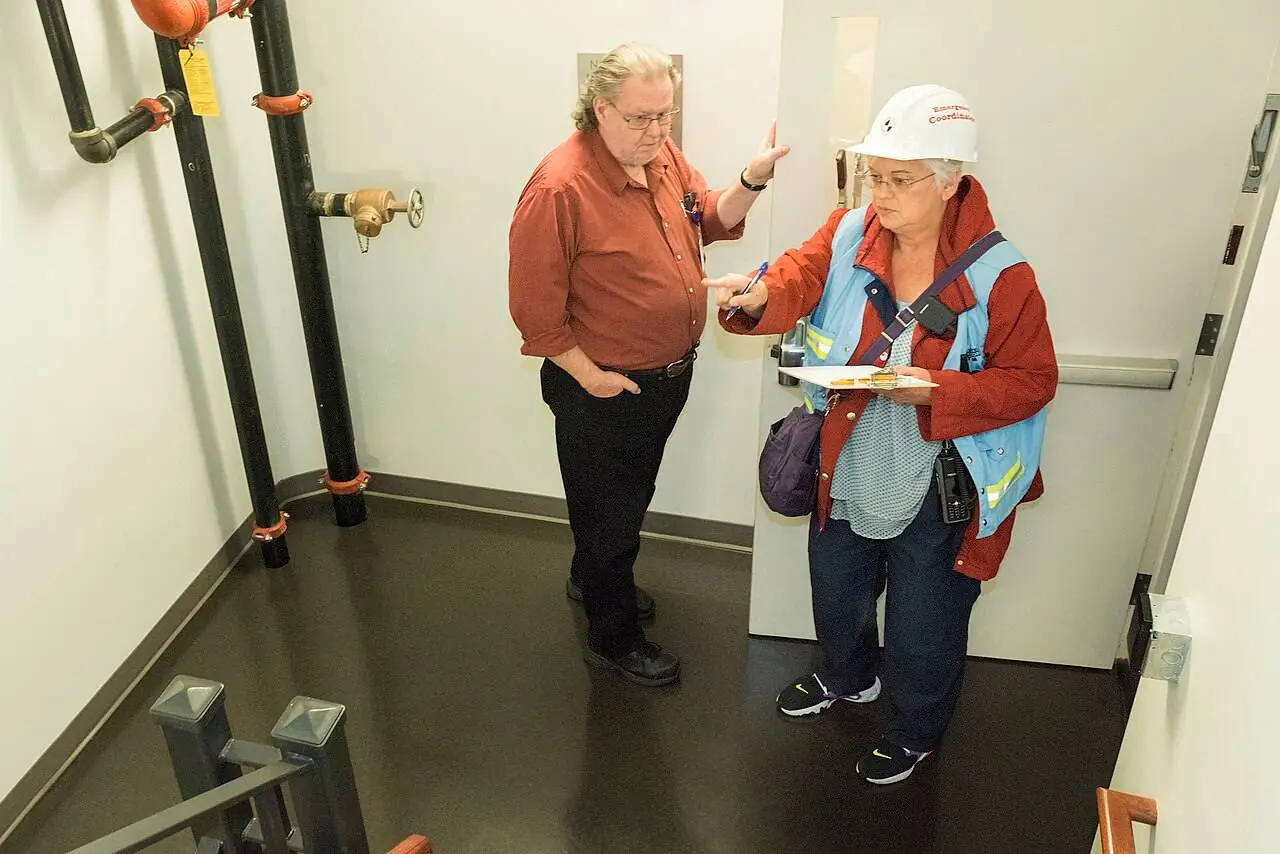
Evacuation drill in a stairwell
Photo: Oregon Department of Transportation · CC BY 2.0
09 — Lifts are for firefighters only

Never use the lift during an evacuation.

  • Power can fail — trapped inside
  • Smoke enters the lift shaft
  • The lift can stop at the burning floor
  • Lifts are operated by firefighters after they arrive, with a special key
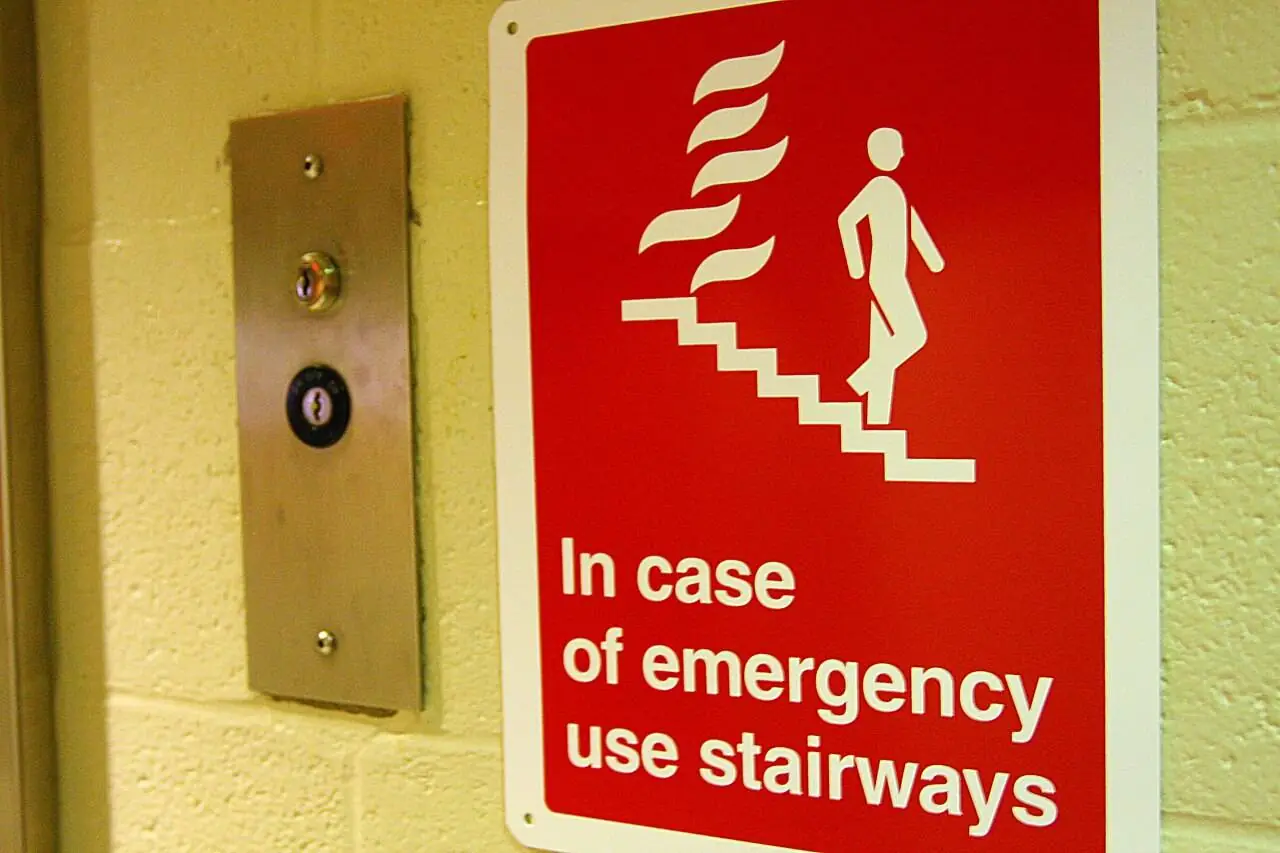
Sign: in an emergency use the stairs
Photo: Martin Cathrae · CC BY-SA 2.0
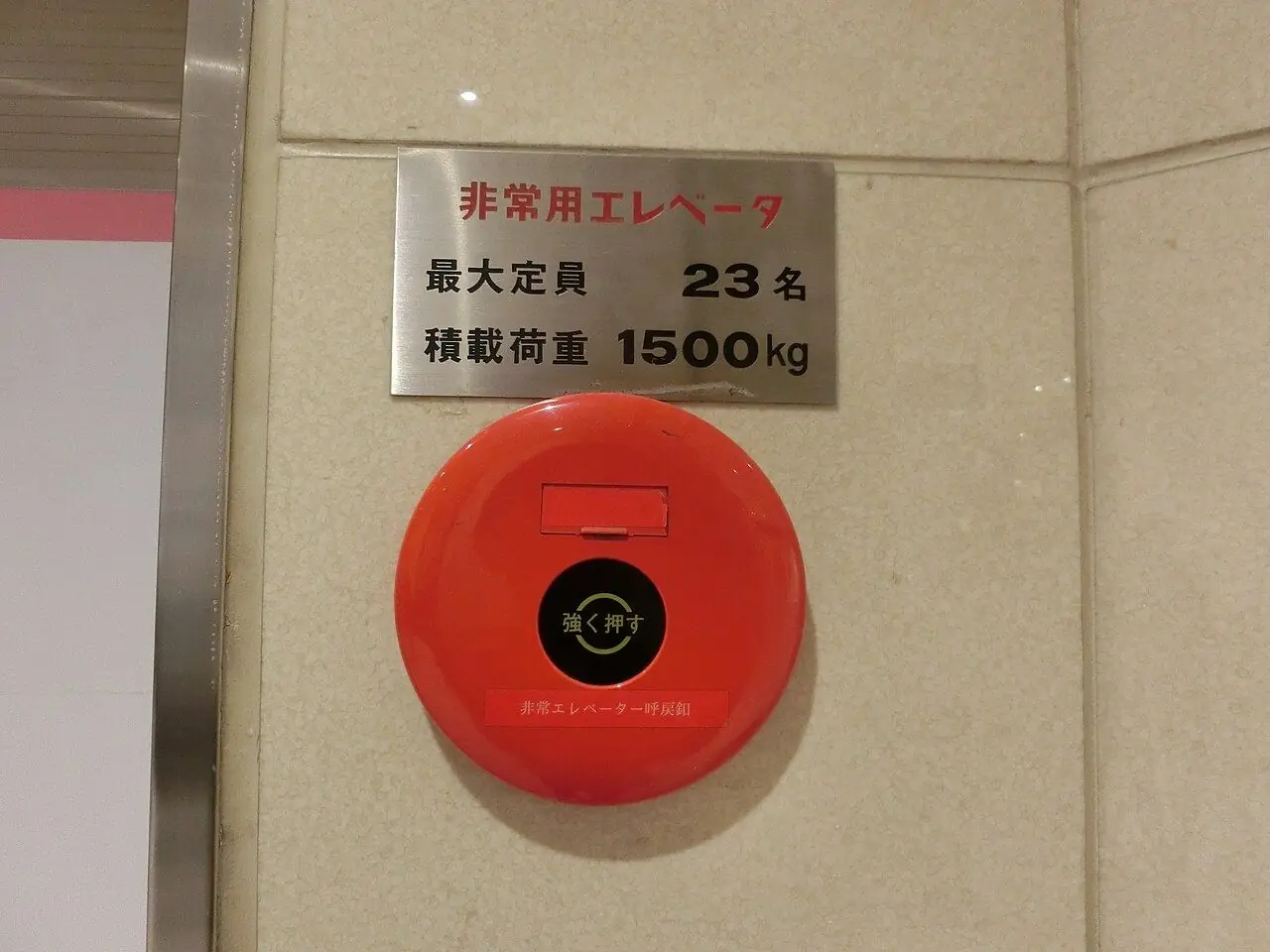
Emergency lift with a firefighter switch
Photo: チャージスズ · CC BY-SA 4.0
10 — Smoke & doors

Smoke is more dangerous than flames.

  • Stay low — clean air is near the floor
  • Cover nose & mouth with cloth
  • Feel the door & handle with the back of your hand
  • Hot door: do not open it, find another way
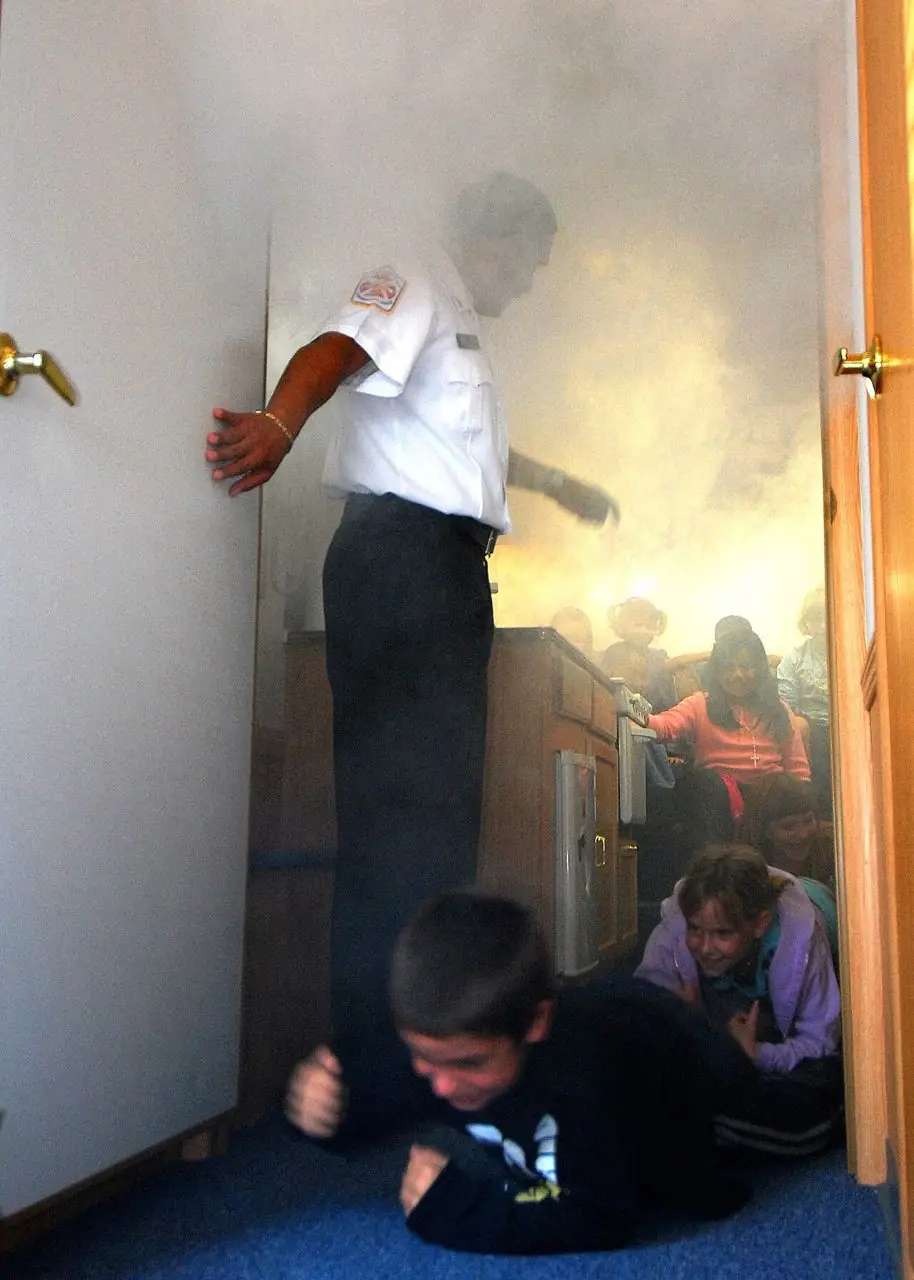
Crawling low in a smoke-filled room
Photo: MC3 Eddie Harrison, U.S. Navy · Public domain
11 — Earthquake

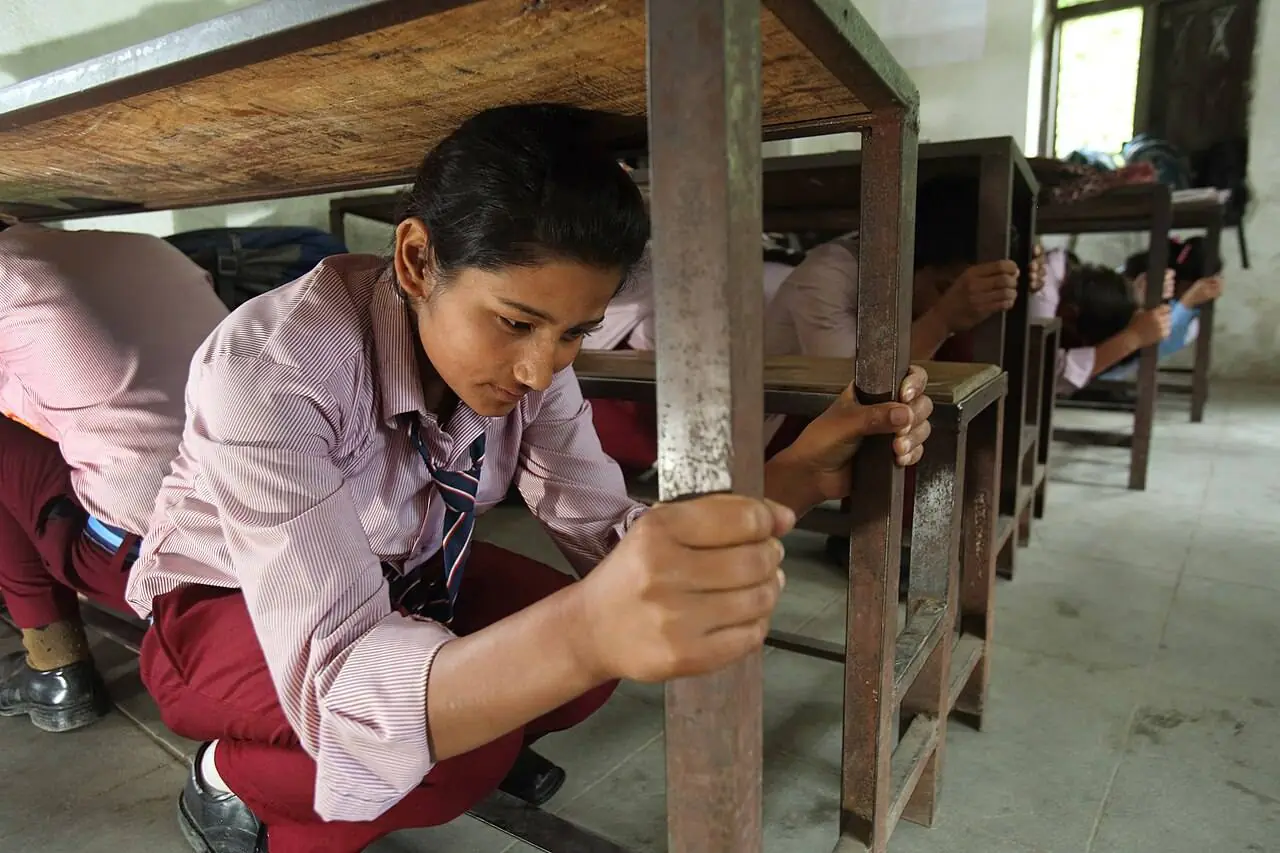
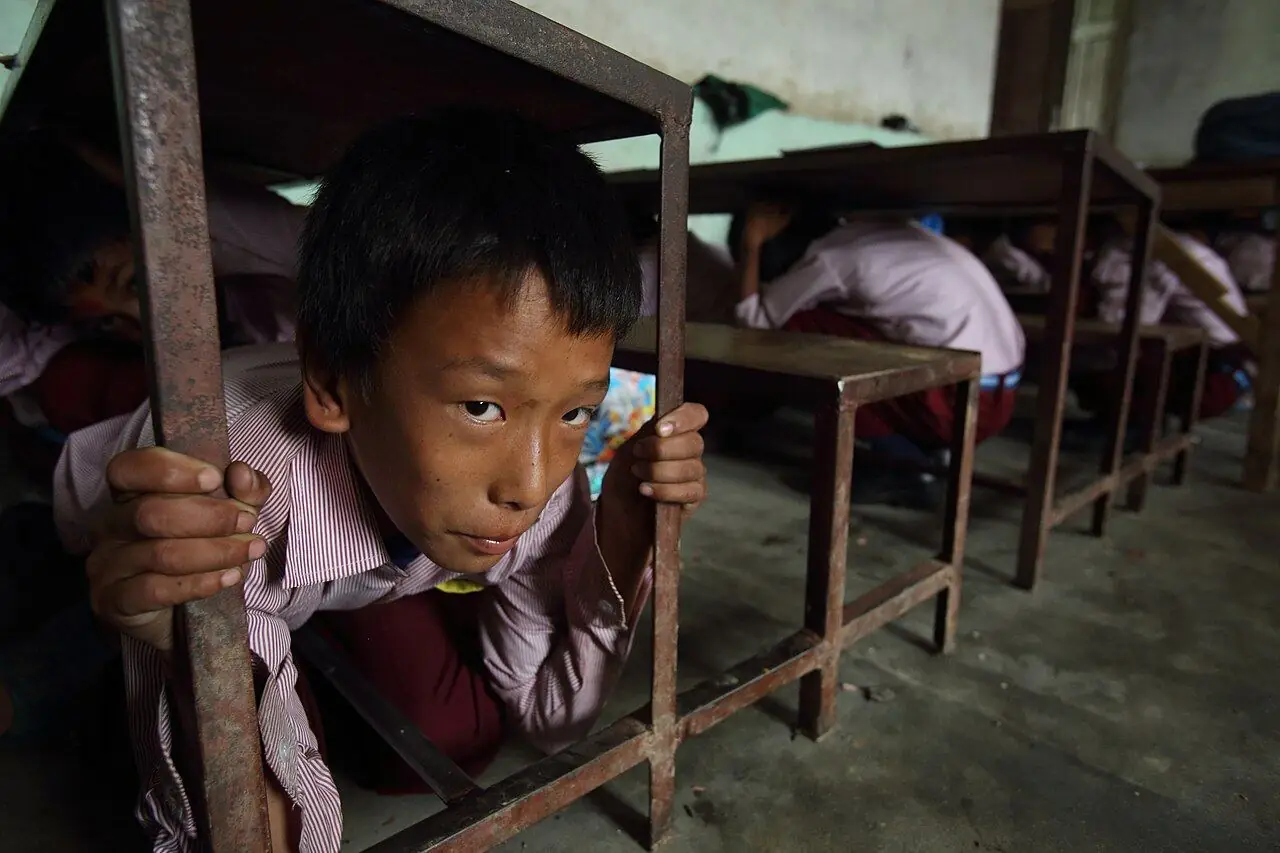
Drop · Cover · Hold on.

  • Never run outside while it is still shaking
  • Under the desk, hold its legs
  • Away from windows, cupboards & shelves
  • When it stops: evacuation alarm, leave in order
  • Watch for aftershocks
Students practising Drop, Cover, Hold On
Photo: Department of Foreign Affairs and Trade (Australia) · CC BY 4.0
Holding on to the desk legs
Photo: Department of Foreign Affairs and Trade (Australia) · CC BY 4.0
12 — Assembly point & student count

Every class counted, nobody goes back inside.

  • Classes line up with their Team Captain & teacher
  • Teachers mark students safe in SMES
  • The Chief instantly sees who is missing / needs help
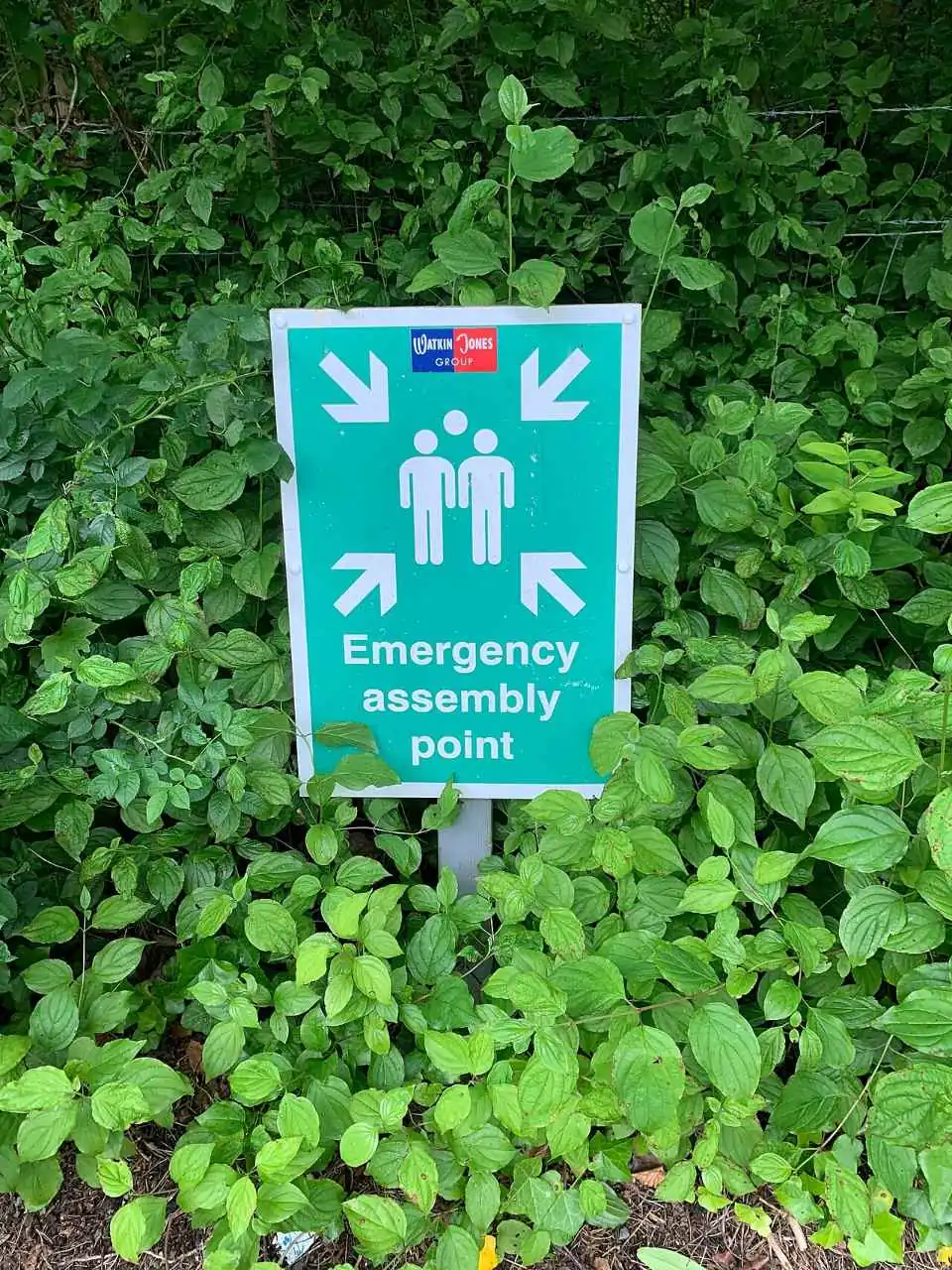
  • Away from buildings, trees, power poles & glass
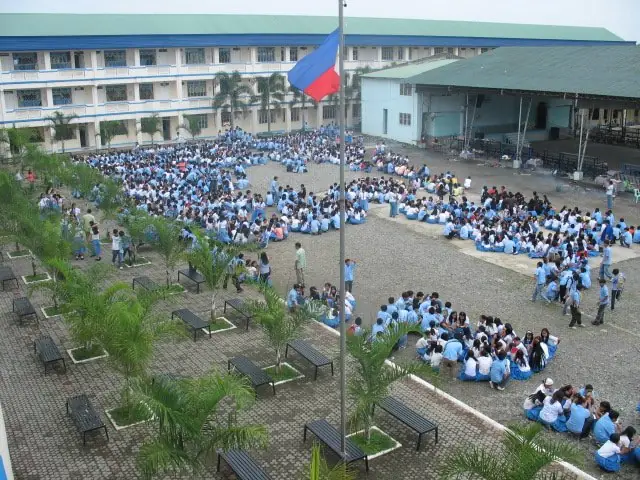
Students assembled by class on the school field
Photo: s5switch · CC BY 3.0
Assembly point sign
Photo: Meirion · CC BY-SA 2.0
13 — When the fire department arrives

Hand over the information, hand over command.

  • Security opens the gate & takes them to the Chief
  • Hand over the plan, fire location, electrical panel & hydrant keys
  • Most important: is anyone still inside?
  • Command inside the building passes to the fire department
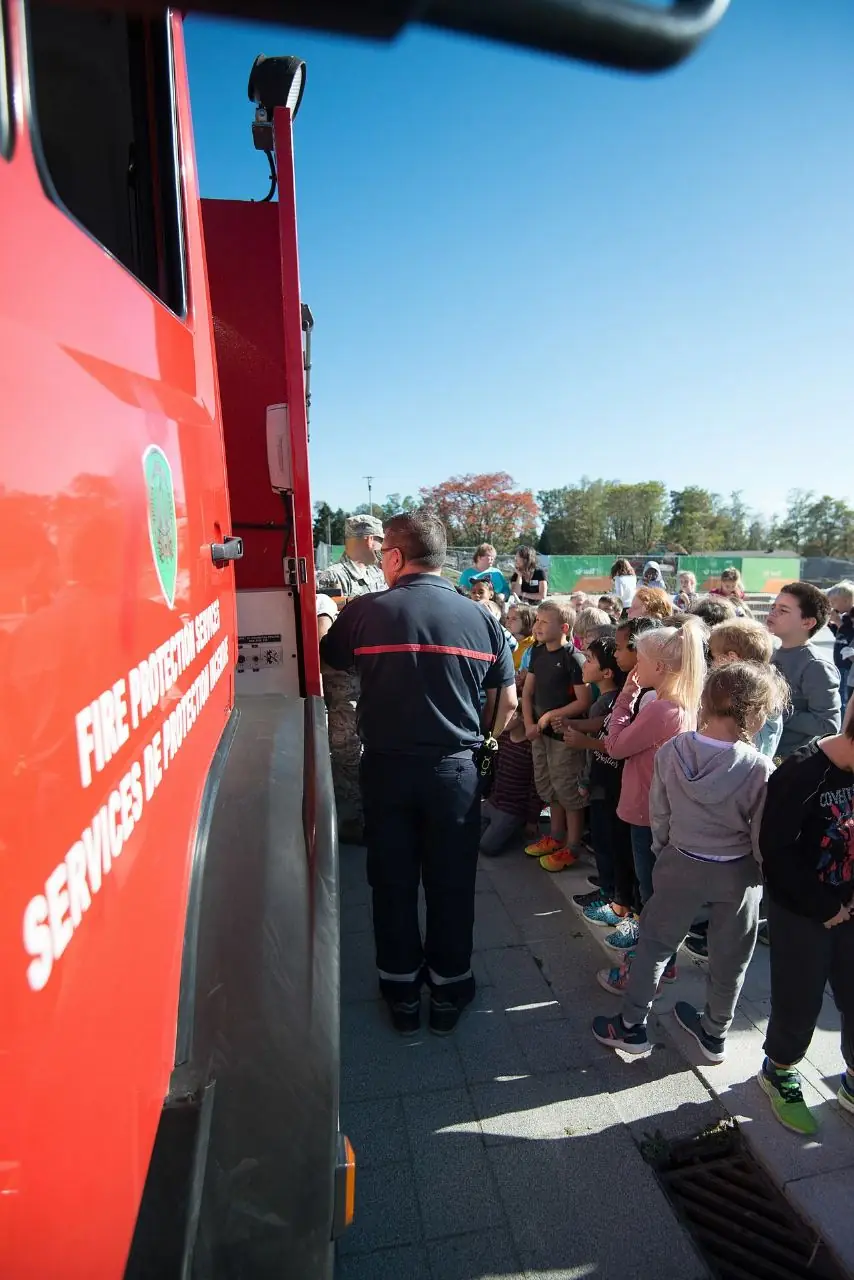
Firefighters with students
Photo: U.S. Army photo by Pierre Courtejoie · Public domain
14 — Parents & pick-up

Keep the road clear for fire engines & ambulances.

Parents receive a notification on their phone and are asked not to rush to the school. Children are handed over through the official pick-up procedure; official news comes from the Parent Portal.

15 — A drill every 3 months

Practise, measure, improve.

  • A different scenario each drill (e.g. west stairs blocked by smoke)
  • Record the time until 90% of students are safe
  • Record late classes & route obstacles
  • Short review & letterhead report in SMES
School evacuation drill
Photo: U.S. Marine Corps photo by Pfc. Pedro Rojas · Public domain
16 — Team & Tasks in SMES

The H.S.E manages everything on one page.

1Chief's certificate details
2Team members & floor areas
3A Team Captain per class
4Fire / earthquake / drill tasks
5Add · edit · delete · reorder
6Shown on everyone's alarm screen
17 — Monthly checks

Ready before it happens.

  • Extinguishers charged (needle green) & easy to reach
  • Escape routes & stairs free of clutter
  • Emergency doors not locked
  • Emergency lights working
  • Evacuation map in every room
  • Emergency numbers posted in the office
Stairs and hose cabinets must always be clear
Photo: 玄史生 · CC BY-SA 3.0

Safety is a habit.

A certified Chief, a team that knows its roles, a Team Captain in every class, and regular drills.

Photo credits (Wikimedia Commons)

Fire Prevention Week 2022 (7462762) — U.S. Army photo by Elena Baladelli · Public domain · source

Marines Support an Elementary School Tsunami Drill (9034452) — U.S. Marine Corps photo by Pfc. Pedro Rojas · Public domain · source

Stair and Fire Hydrant in 3rd Floor of Jian-Kang Elementary School — 玄史生 · CC BY-SA 3.0 · source

Hold onto the stair handrail for your safety (27214011221) — Ben Tsai · CC BY 2.0 · source

Door area marking on the floor in emergency evacuation stairs — Syced · CC0 · source

Stairwell evacuation (48915346082) — Oregon Department of Transportation · CC BY 2.0 · source

Use Stairways (2451848080) — Martin Cathrae · CC BY-SA 2.0 · source

非常用エレベーター (emergency elevator) — チャージスズ · CC BY-SA 4.0 · source

Fire drill in a smoke trailer, Naples, Italy — MC3 Eddie Harrison, U.S. Navy · Public domain · source

Fire extinguisher training — Aaronrspn · CC BY-SA 4.0 · source

Fire Alarm Pull Station — SamuelDuval · CC BY-SA 3.0 · source

Students practice earthquake drill (10727359493) — Department of Foreign Affairs and Trade (Australia) · CC BY 4.0 · source

Students practices earthquake drill (10727185804) — Department of Foreign Affairs and Trade (Australia) · CC BY 4.0 · source

Earthquake drill in TCNHS — s5switch · CC BY 3.0 · source

Emergency assembly point sign at Parc Menai, Bangor — Meirion · CC BY-SA 2.0 · source

Fire Prevention Week — Fire Department visits Elementary School (4841732) — U.S. Army photo by Pierre Courtejoie · Public domain · source